
Angle steel is a hot-rolled L-shaped steel section available in equal-leg and unequal-leg configurations. Its compact geometry makes it suitable for bracing, framing, supports, reinforcement, connection components, machinery structures, and many fabrication applications. Selecting the right angle requires more than comparing dimensions. Buyers should consider steel grade, leg size, thickness, length, loading conditions, corrosion environment, manufacturing standard, surface condition, connection method, and required documentation. A carefully selected angle steel product can improve structural reliability while simplifying fabrication and installation.
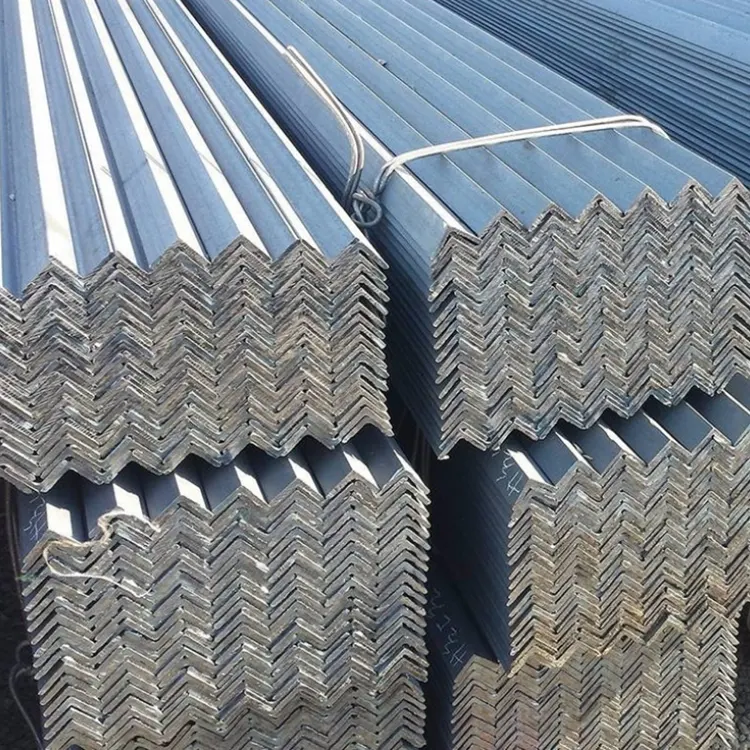
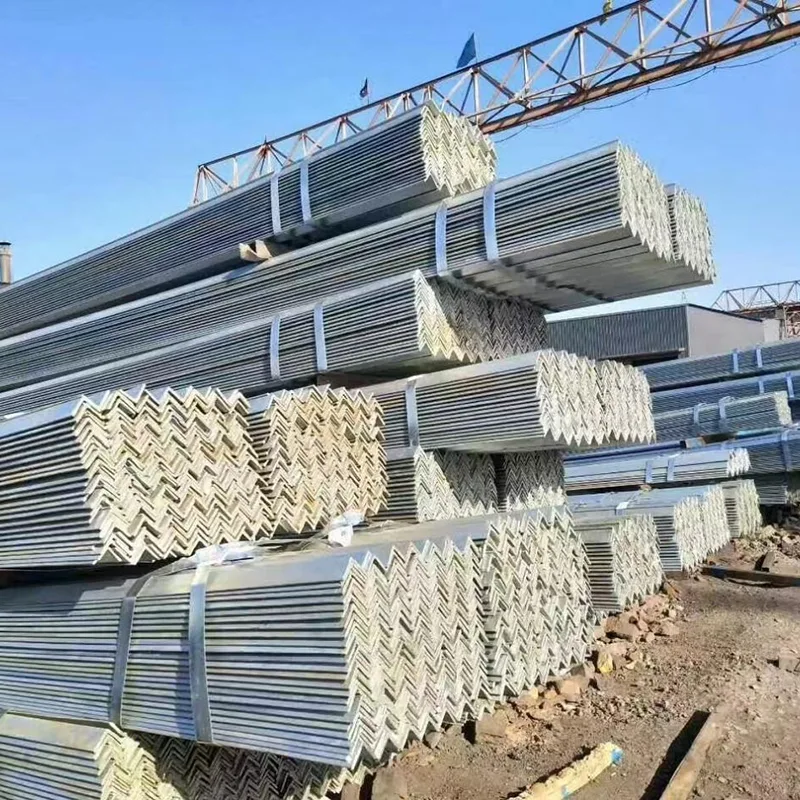
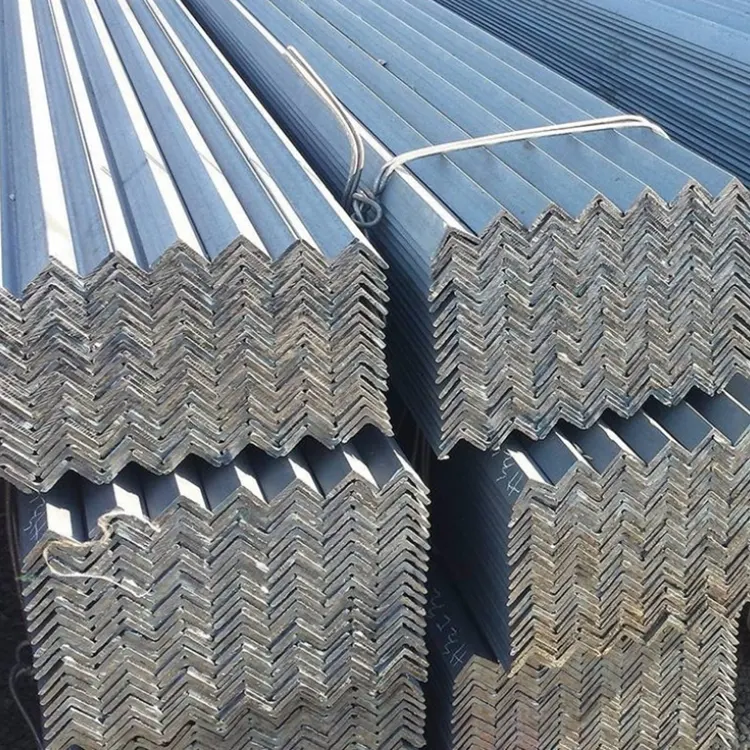
Angle steel is a structural steel profile manufactured with two legs connected at approximately 90 degrees, creating an L-shaped cross-section. It is commonly referred to as steel angle, angle bar, angle iron, or L-section. Depending on the application, angle steel can serve as a primary structural member, secondary support, reinforcement component, framing element, or connection detail.
Its popularity comes from a straightforward combination of geometry and practicality. The two legs provide surfaces for bolting, welding, fastening, or supporting other components. At the same time, the L-shaped profile offers useful resistance to loads in more than one direction without requiring a large amount of material.
Angle steel is normally supplied as a straight length and can be fabricated through cutting, drilling, punching, welding, machining, galvanizing, painting, or other finishing processes. The exact manufacturing and finishing requirements depend on the project specification and applicable material standard.
An angle section consists of two flat legs joined at a corner. The legs can have the same width or different widths, while the thickness generally remains consistent across the section. The corner may include a controlled internal radius created during rolling.
A typical designation describes the leg dimensions and material thickness. For example, an equal-leg angle may be identified by two identical leg dimensions followed by thickness, while an unequal-leg angle uses two different leg dimensions.
| Specification | Meaning | Why It Matters |
|---|---|---|
| Leg Width | Width of each perpendicular leg | Influences connection area, geometry, stiffness, and fit |
| Thickness | Material thickness of the angle | Affects weight, strength, fabrication, and connection requirements |
| Length | Overall supplied piece length | Determines transportation, cutting, fabrication, and material utilization |
| Steel Grade | Specified mechanical and chemical properties | Determines strength, weldability, and suitability for the intended service |
| Surface Condition | Black, coated, galvanized, or otherwise finished surface | Influences corrosion protection and downstream finishing |
Section properties such as cross-sectional area, moment of inertia, radius of gyration, and section modulus may also be required for engineering calculations. For structural projects, these properties should be evaluated by the responsible engineer according to the applicable design standard rather than estimated from appearance alone.
One of the first decisions when purchasing angle steel is choosing between equal-leg and unequal-leg configurations. Both provide the characteristic L-shaped geometry, but their different proportions affect connection design, orientation, stiffness, and application suitability.
Both legs have the same nominal width. This symmetrical geometry is convenient for general framing, bracing, brackets, supports, racks, reinforcement, and fabrication projects where balanced geometry is useful.
One leg is longer than the other. This configuration can provide greater connection or bearing area in a selected direction and is useful where the structure requires an asymmetric section.
Multiple angles can be connected together to create more complex structural arrangements. Such configurations require appropriate engineering evaluation of connections, load paths, stability, and fabrication.
| Feature | Equal-Leg Angle | Unequal-Leg Angle |
|---|---|---|
| Leg Geometry | Two legs of equal width | Two legs of different widths |
| Typical Advantage | Balanced and straightforward geometry | Directional flexibility and larger connection surface where needed |
| Common Uses | Frames, braces, racks, brackets, supports | Reinforcement, structural connections, frames, lintels, specialized fabrication |
| Design Consideration | Check buckling, connection, and orientation requirements | Pay particular attention to section orientation and principal-axis behavior |
The appropriate steel grade depends on the design requirements, market, applicable regulations, fabrication process, and environmental conditions. International projects may reference different standards, so buyers should confirm the required specification before placing an order.
Common specifications in international steel procurement include ASTM requirements in North American markets, EN specifications in European projects, GB standards in China, and JIS standards in Japan and other markets. The grade designation alone should not be treated as interchangeable across standards without checking the complete specification.
| Standard Family | Typical Market | Buyer Should Confirm |
|---|---|---|
| ASTM | North America and international projects | Material grade, dimensional requirements, testing, and applicable product specification |
| EN | Europe and projects using European specifications | Grade, product standard, dimensions, tolerances, and delivery condition |
| GB | China and projects based on Chinese standards | Grade, dimensions, tolerances, chemical composition, and mechanical properties |
| JIS | Japan and projects using Japanese specifications | Grade, dimensions, mechanical properties, and inspection requirements |
For international procurement, documentation can be just as important as the physical product. Buyers may need mill test certificates, dimensional inspection records, chemical composition results, mechanical test data, or other documents required by the project.
Angle steel is used across construction, manufacturing, infrastructure, transportation, energy, storage systems, and general metal fabrication. Its ability to provide two perpendicular surfaces makes it particularly useful when components need to be joined, reinforced, supported, or positioned.
Angle sections can be used as bracing members, secondary framing components, supports, and reinforcement. In these applications, engineers consider axial forces, compression stability, tension capacity, connection details, and member slenderness.
Machinery bases, equipment frames, protective structures, platforms, guards, and support assemblies can incorporate angle steel where a practical and weldable structural profile is required.
Angle steel can provide a straightforward framework for racks, shelving, storage platforms, and material-handling structures. Thickness and dimensions should be selected according to the expected load, span, support spacing, and connection method.
Angle profiles are frequently associated with lattice structures, tower components, transmission structures, communication infrastructure, and other engineered assemblies. These applications require careful consideration of wind loads, connections, corrosion protection, fatigue, and structural stability.
Fabricators also use angle steel for brackets, edge reinforcement, frames, mounting supports, equipment enclosures, architectural details, and custom assemblies. Its simple profile allows it to be cut and joined using common fabrication processes.
Choosing angle steel correctly starts with understanding the actual working conditions instead of simply selecting the most commonly available size. A specification that works for a light bracket may be unsuitable for a structural brace or heavily loaded frame.
Determine whether the angle will function as a brace, support, frame component, reinforcement, connection member, or fabrication part. The role of the section determines which dimensions and mechanical properties are relevant.
Confirm leg width, thickness, length, and tolerances. For tight fabrication projects, dimensional consistency can significantly affect fit-up and assembly efficiency.
Match the material grade with the required yield strength, tensile strength, weldability, toughness, temperature conditions, and applicable design requirements.
Angle steel does not behave like a symmetrical wide-flange section. The orientation of the section can influence its structural response, especially for unequal-leg angles or members exposed to compression and bending.
Decide whether the section will be welded, bolted, or connected through another method. The available leg width should provide enough space for the intended connection while maintaining required edge distances and fabrication tolerances.
Indoor applications, outdoor structures, coastal areas, chemical facilities, and humid environments may have very different corrosion requirements. Surface treatment or a suitable coating system may be necessary.
For engineered projects, request the material certificates and inspection documents required by the project specification before finalizing the purchase.
Quality control begins before the steel reaches the construction site. A clear purchase specification reduces misunderstandings between the buyer, supplier, fabricator, and project team.
| Inspection Point | What to Check | Potential Risk if Ignored |
|---|---|---|
| Dimensions | Leg width, thickness, length, straightness, and tolerances | Poor fit-up or fabrication problems |
| Material Grade | Specified grade and corresponding test documentation | Insufficient mechanical performance |
| Surface | Rust, scale, damage, coating, or galvanizing condition | Reduced durability or additional preparation work |
| Quantity | Piece count, total length, and calculated weight | Delivery shortages or cost discrepancies |
| Packaging | Bundling, identification, protection, and loading arrangement | Damage or difficulty identifying materials after delivery |
| Certificates | Mill test and inspection documents where required | Traceability and project approval issues |
Buyers should also verify that the supplied material matches the purchase order. Clear markings and bundle identification can make receiving inspection much easier, particularly when multiple sizes and grades are being delivered together.
One of the reasons angle steel remains popular is its compatibility with common fabrication processes. Depending on the grade and thickness, it can generally be cut, drilled, punched, welded, assembled, and finished using standard industrial equipment.
Cutting can be performed to achieve project-specific lengths. Accurate cutting is particularly important for prefabricated frames and assemblies where multiple pieces must fit together with limited adjustment.
Holes can be prepared for bolted connections and mounting hardware. Hole size, spacing, edge distance, and location should follow the engineering and fabrication requirements of the project.
Angle steel can be incorporated into welded assemblies when the selected grade and thickness are compatible with the welding procedure. Welding parameters, joint preparation, preheating requirements, filler material, and inspection should be determined by qualified fabrication personnel.
Depending on the service environment, angle steel may receive painting, priming, galvanizing, or another corrosion-protection system. Surface preparation should be compatible with the selected coating system.
Many procurement problems are caused not by the steel itself but by incomplete specifications. Avoiding a few common mistakes can make sourcing more predictable.
Angle steel is commonly used for structural bracing, frames, supports, brackets, reinforcement, industrial equipment, racks, towers, platforms, and general metal fabrication. Its specific suitability depends on its dimensions, grade, loading conditions, and connection design.
Equal angle steel has two legs of the same width, while unequal angle steel has two legs with different widths. Equal angles provide balanced geometry, whereas unequal angles can offer greater flexibility when a project requires a larger surface in one direction.
Many angle steel grades can be welded when the material grade, thickness, joint design, welding procedure, and fabrication conditions are properly considered. Welding should follow the requirements applicable to the selected material and project.
Thickness should be determined from the structural or fabrication requirements rather than appearance alone. Load, span, buckling, connection design, corrosion allowance, fabrication method, and applicable design standards may all influence the required thickness.
Yes, angle steel can be used outdoors, but corrosion protection may be required depending on the environment. Galvanizing, painting, coating systems, and appropriate material specifications can help extend service life.
Provide the required angle type, leg dimensions, thickness, grade, standard, length, quantity, surface treatment, delivery destination, required certificates, and any cutting, drilling, galvanizing, or packaging requirements.
Many suppliers can provide cut-to-length services depending on production capability and order requirements. Customized lengths should be confirmed before ordering because minimum quantities, cutting tolerances, packaging, and additional processing may affect the quotation.
Material certificates provide traceability and help verify chemical composition, mechanical properties, heat information, and compliance with the specified material requirements. They are particularly valuable for engineered construction and industrial projects.
Angle steel continues to be an important structural and fabrication material because it combines a compact L-shaped profile with practical connection surfaces, versatile dimensions, and broad application potential. From simple brackets and equipment frames to engineered bracing systems and industrial structures, the same basic profile can serve very different purposes when the correct grade and dimensions are selected.
The best purchasing decision therefore begins with the application rather than the product name. Buyers should establish the required geometry, thickness, grade, applicable standard, loading conditions, connection method, surface treatment, inspection requirements, and delivery specifications before comparing suppliers.
For international projects, clear technical communication is equally important. A reliable supplier should be able to understand project specifications, provide consistent dimensions and material quality, support required documentation, and coordinate production and delivery according to the buyer's requirements.
Tianjin Shixinda Steel Sales Co., Ltd. provides steel products for construction, industrial fabrication, structural applications, and international sourcing requirements. When selecting angle steel, our team can help buyers review dimensions, grades, specifications, quantities, and project requirements to identify a suitable supply solution.
Whether you need standard angle steel for general fabrication or specific specifications for an engineered project, clear requirements are the first step toward efficient procurement. For product details, specifications, quotations, and project-related requirements, please contact us to discuss your angle steel needs.