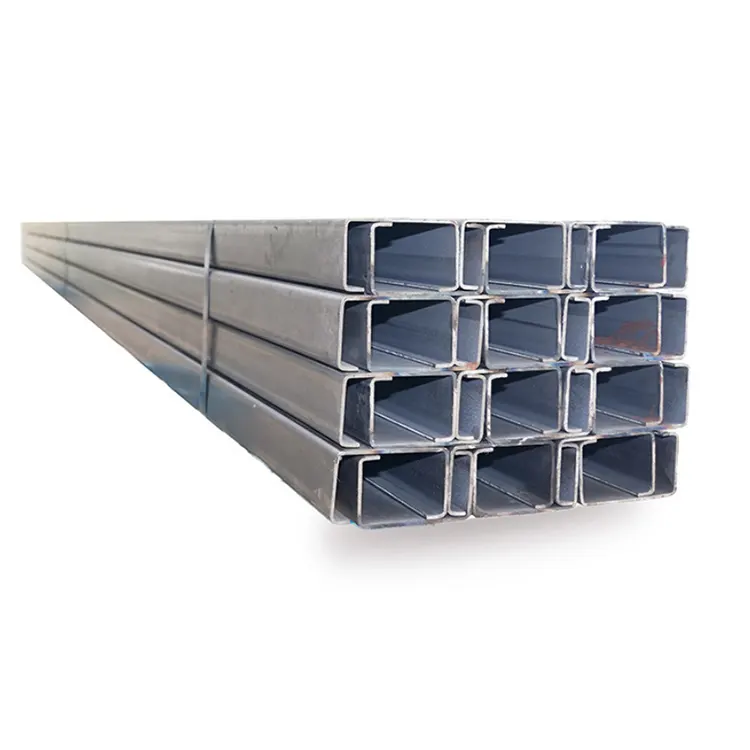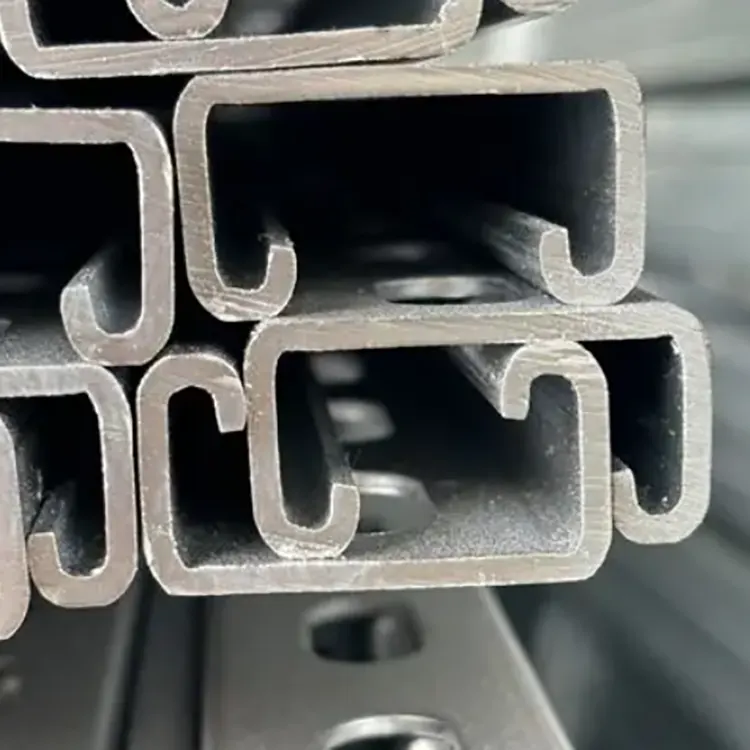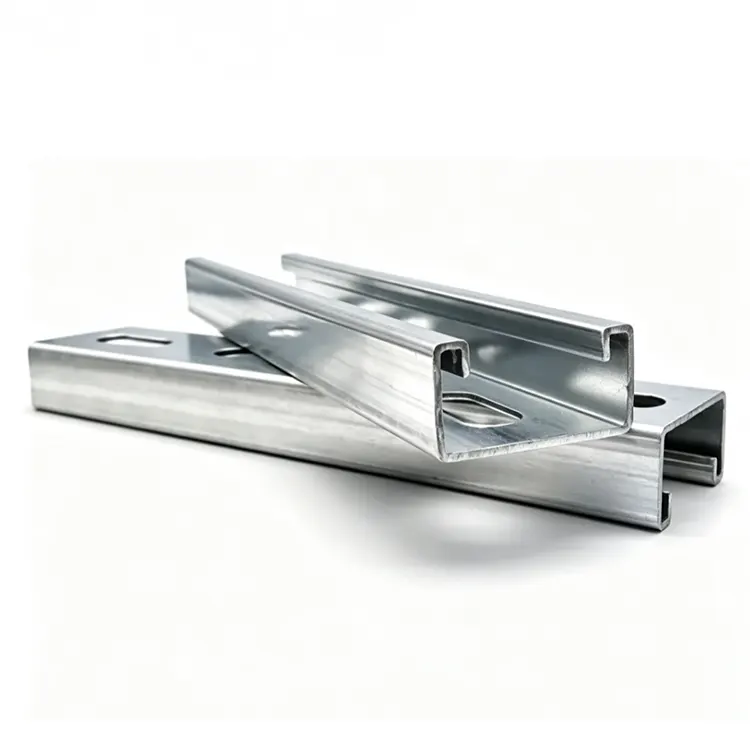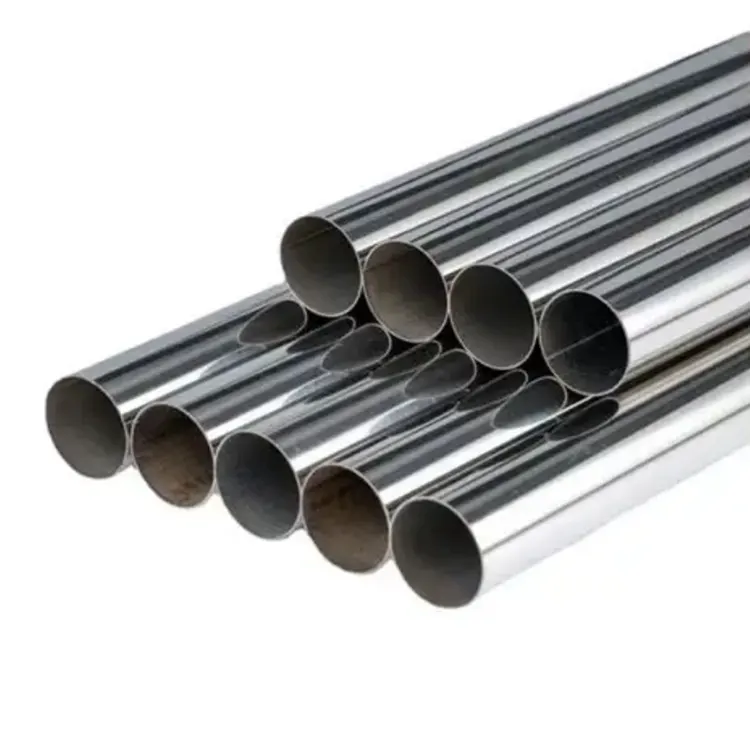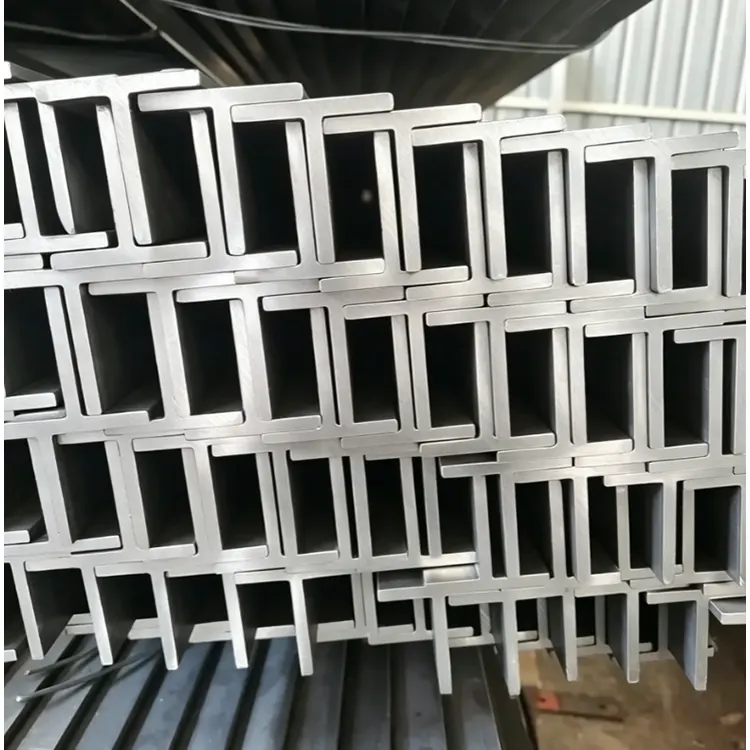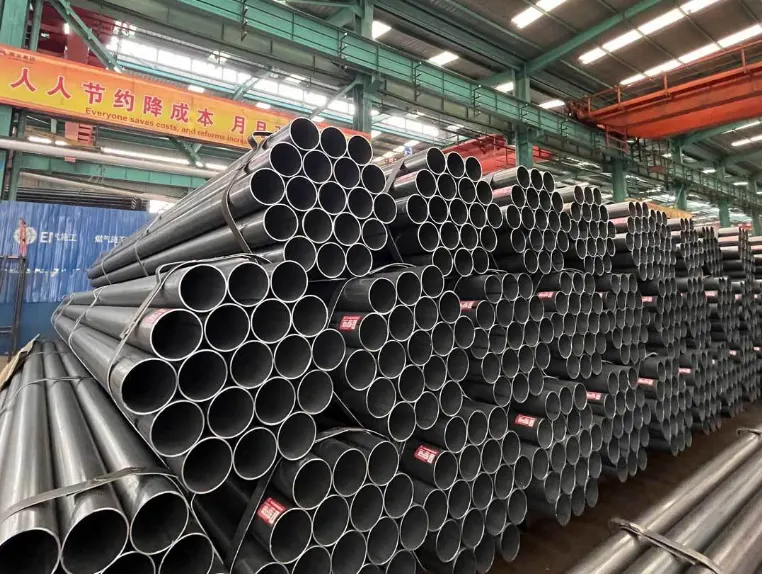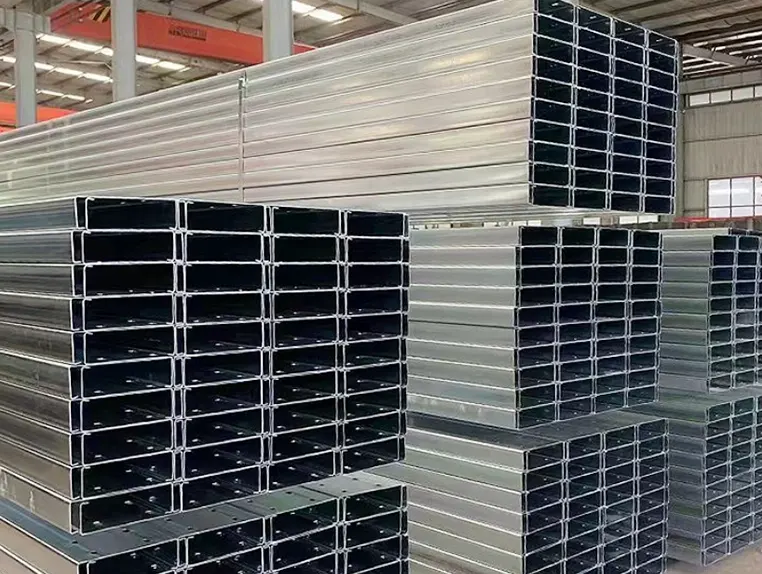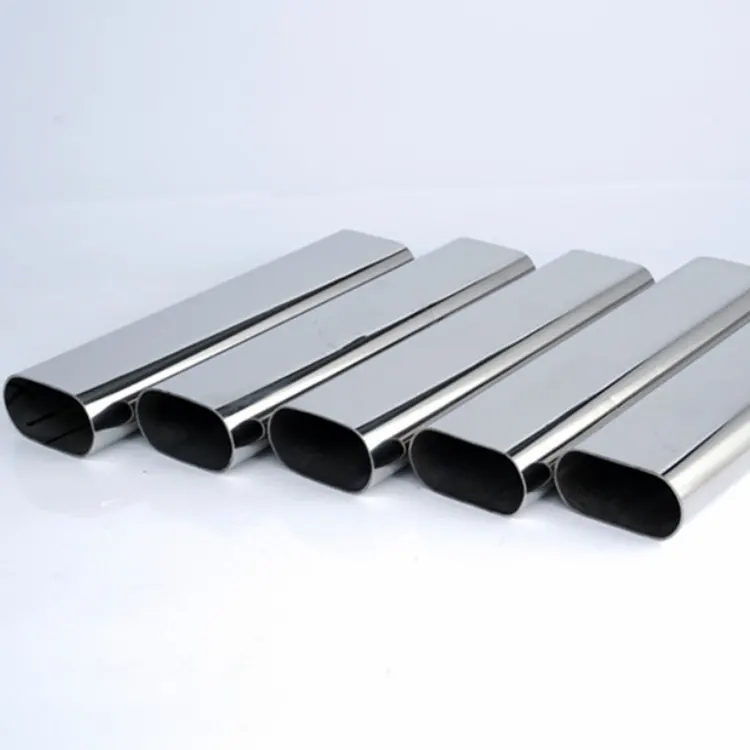
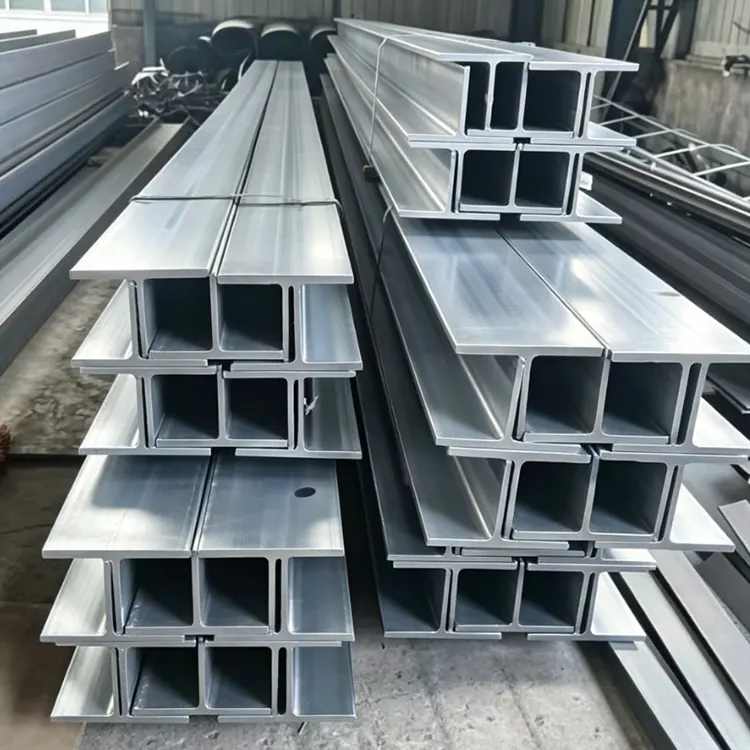
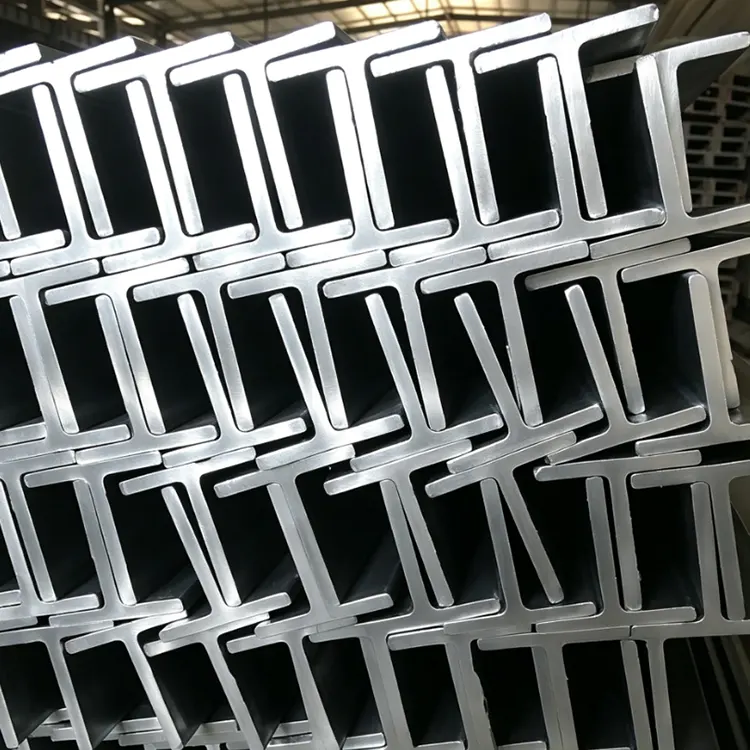
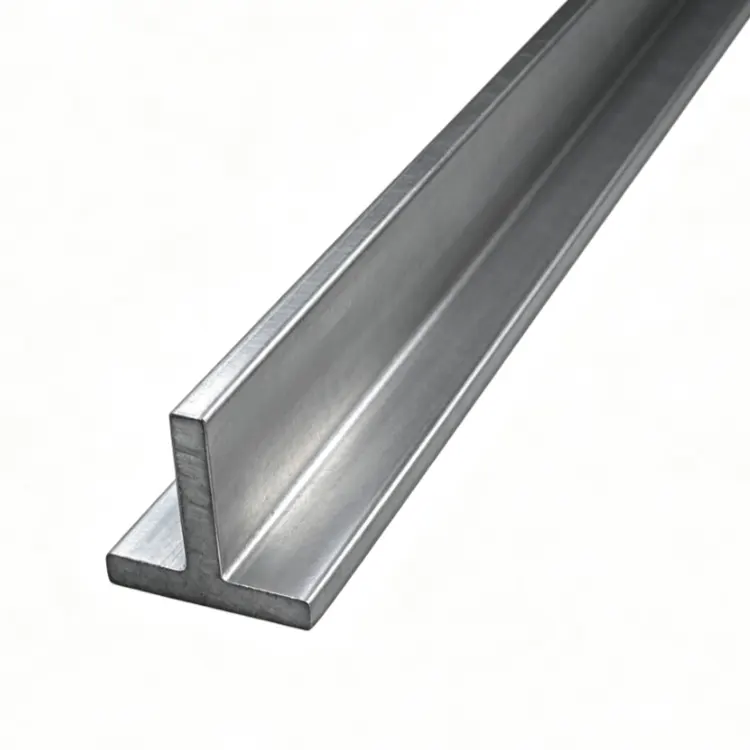
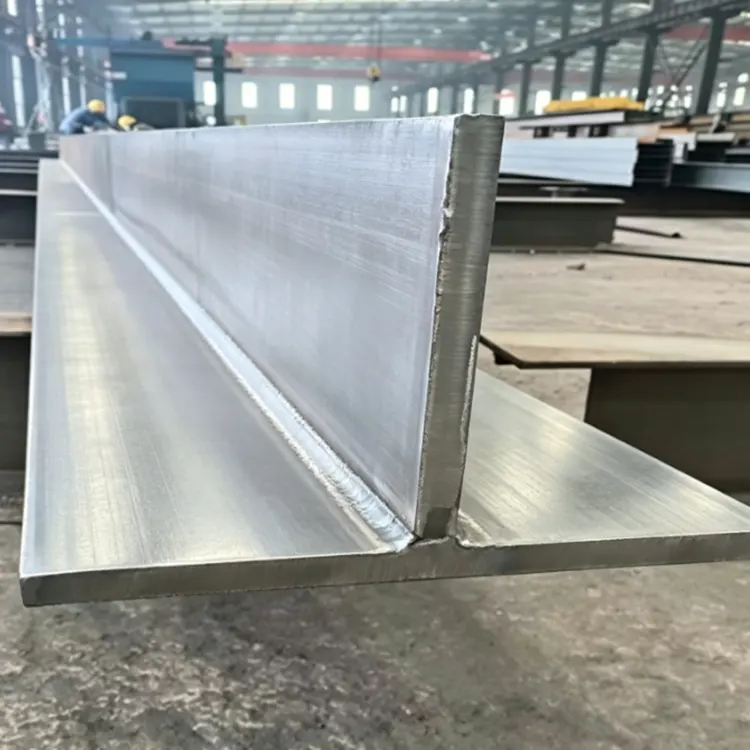
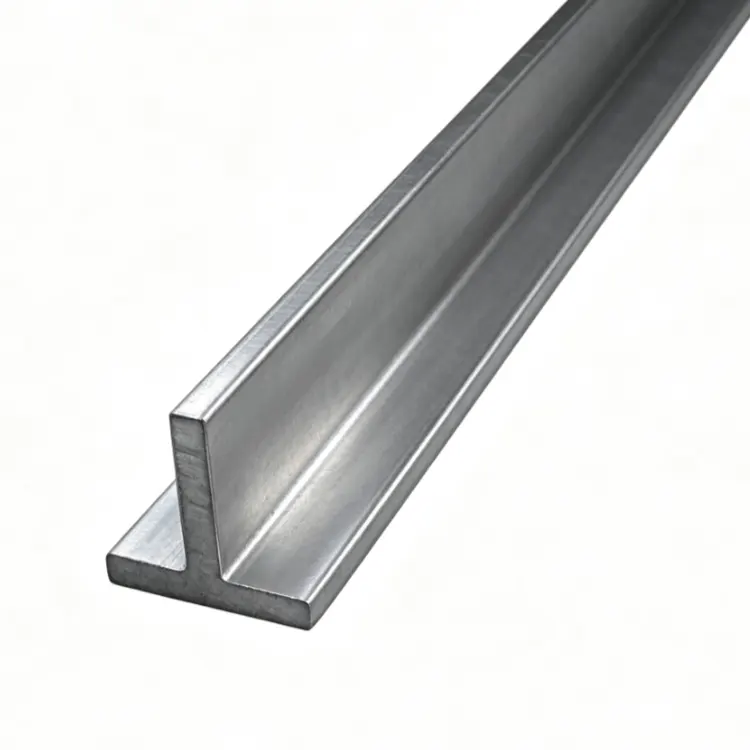
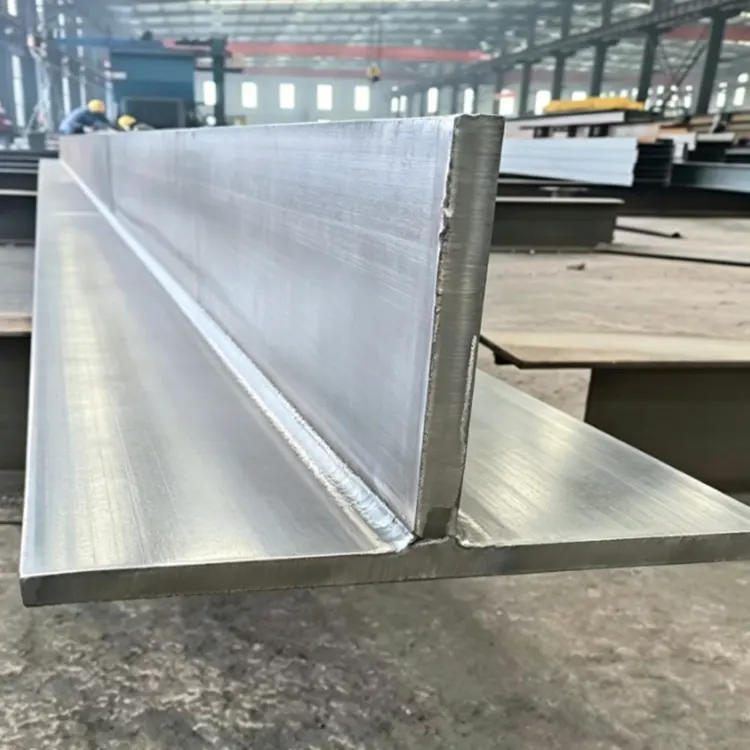
Hot dip Galvanized T Beam by Shixinda factory is a carbon structural steel section with a T-shaped cross-section. It is manufactured using one of three processes—hot rolling, H-section steel splitting, or welding of steel plates—to form the T-shaped base profile, followed by a galvanizing process (either hot-dip or electro-galvanizing) to coat the entire surface of the steel with a zinc layer for corrosion protection; this product is collectively referred to as galvanized T-section steel.
The cross-sectional design ensures rational load distribution, reducing steel consumption and lowering costs; the T-shaped structure features an integrated forming process for the web and flanges, offering superior bending resistance and load-bearing capacity compared to angle steels of equivalent weight, requiring less material under identical loading conditions, and effectively reducing the overall cost of the steel structure.
Three molding processes are available, offering comprehensive suitability for all application scenarios: Hot-rolled T-beams feature high precision and are ideal for photovoltaic components; Sectioned T-beams offer large specifications and high strength, making them suitable for main factory beams; Welded T-beams support non-standard customization and can be matched for both small-scale and large-scale projects.
High surface flatness and easy assembly; regular cross-sections with no twisting or deformation; facilitates punching, cutting, bolted splicing, and on-site installation, thereby reducing the required leveling work during construction.
Hot-dip galvanizing provides comprehensive corrosion protection and ensures a long service life. The high-temperature zinc immersion process coats both the interior and exterior surfaces, as well as all edges and gaps of the steel, forming a protective zinc layer that shields against moisture, rainwater, and salt/alkali exposure; this treatment is suitable for outdoor, coastal, or industrial site environments where corrosion may occur, offering a service life of over 15 years while eliminating subsequent maintenance costs associated with rust removal and painting.
The zinc coating exhibits strong adhesion and is highly resistant to impact, preventing peeling or detachment; the metallurgical bond between the zinc coating and the steel ensures that it does not peel or crack even under transportation or installation impacts; compared with spray-painted surfaces or cold galvanized coatings, this solution demonstrates significantly superior durability.
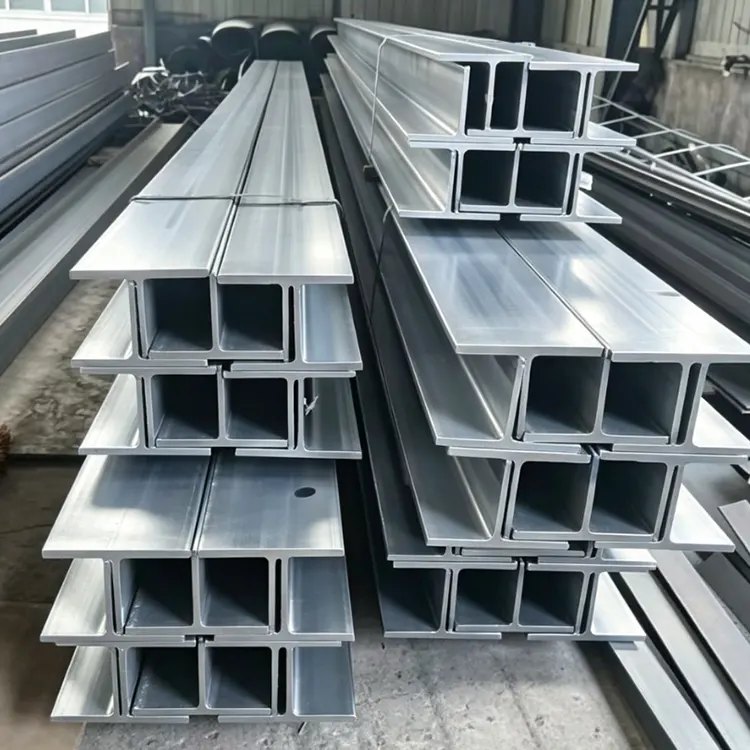
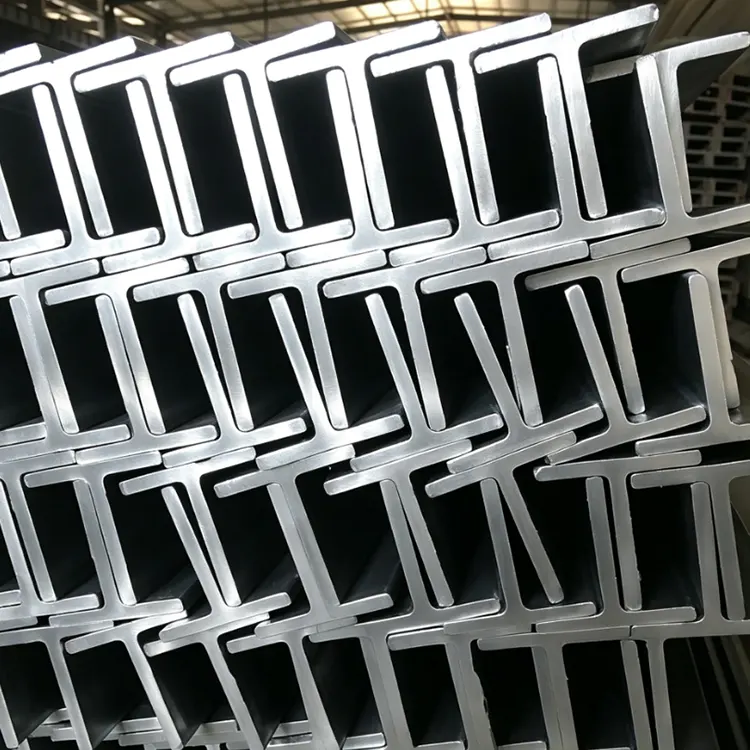
Mechanical load-bearing capability: The T-section design provides stable resistance to bending, shear, and compression, serving as primary and secondary keels, supports, and load-bearing components; compared with angle steel or channel steel, it requires less material and has a lower self-weight, making it suitable for various steel structure support applications across light, medium, and heavy loads, where it functions as the load-bearing framework for buildings, photovoltaic systems, and equipment.
Long-term corrosion protection functionality: The hot-dip galvanized coating completely encapsulates both the inner and outer surfaces of the profile, effectively blocking moisture, rainwater, salt/alkali exposure, and humid air, thereby providing long-term rust prevention for outdoor applications; this solution eliminates the need for on-site rust removal or painting, thereby streamlining subsequent corrosion protection maintenance procedures and making it suitable for corrosive environments such as open-air areas, coastal regions, and chemical plant sites.
Convenient assembly and forming capabilities: The profiles feature standardized dimensions, supporting cutting, punching, bending, welding, and prefabrication; they are designed for standardized bolted splicing and on-site assembly, thereby shortening the construction cycle and enabling seamless integration between factory prefabricated components and rapid on-site installation.
Photovoltaic sector: Corrosion-resistant load-bearing support frame – specifically designed to provide primary and secondary support for photovoltaic modules; offers 20-year long-term rust protection in outdoor environments, while its lightweight design reduces overall support system weight.
Construction sector: Curtain wall / factory corrosion-resistant load-bearing framing; serving as exterior wall framing, roof purlins, and load-bearing beams for equipment platforms; suitable for outdoor structures requiring no coating.
Municipal power infrastructure sector: Outdoor corrosion-resistant fixed supports for pipe corridors, guardrails, and power equipment base supports; designed for long-term outdoor use without rusting;
Heavy-duty steel structures: heavy-load corrosion-resistant secondary beam components featuring large-sized segmented sections or welded galvanized T-sections; suitable for heavy-load corrosion-resistant structural applications in factory buildings and retaining walls.
|
Specification Category |
Technical Specifications |
Use Case Description |
|
Material Type |
Carbon steel substrates: Q235B, Q355B, Q420B; corrosion-resistant special materials: 304/316 stainless steel, low-alloy weathering steel |
Q235B/Q355B/Q420B: suitable for industrial workshops, building steel structures, and general load-bearing supports (using galvanized T-section steel as the mainstream substrate); 304/316 stainless steel: suitable for highly corrosive outdoor environments and chemical processing facilities; low-alloy weathering steel: suitable for open-air landscaping projects and exposed components of bridges. |
|
dimensions |
Section annotation rules: height H×web width B×web thickness t₁ ×flange thickness t₂; standard section range: H 25 mm–H 400 mm, B 25 mm–B 300 mm; wall thickness range: web 3 mm–20 mm, flange 4 mm–25 mm; standard lengths: 6 m/9 m/12 m (custom non-standard lengths available). |
Small specifications (H≤100 mm) are suitable for photovoltaic mounting systems, precision mechanical components, elevator guide rails, and small embedded parts; medium specifications (H: 100–200 mm) are suitable for curtain wall frames, photovoltaic mounting systems, and steel structural secondary beams; large specifications (H≥200 mm) are suitable for main beams in industrial plants, bridge components, and heavy-duty platforms. |
|
dimensional accuracy |
Section height / Wing span tolerance≤ ±2.0 mm; web thickness / flange thickness tolerance:±0.5–1.0 mm; straightness deviation:≤1.5 mm/m; flange perpendicularity:≤B/100; end cut inclination deviation:≤3 mm |
Suitable for on-site splicing of steel structures, bolted through-hole connections, and welded assembly; applicable to conventional applications such as building structures, bridges, and photovoltaic mounting systems; high-precision customized versions are also compatible with rail transit and precision mechanical sliding track applications. |
|
mechanical property |
Q235B: yield strength≥235 MPa, tensile strength 375–500 MPa, elongation≥25%; Q355B: yield strength≥355 MPa, tensile strength 470–630 MPa, elongation≥21%; Q420B: yield strength≥420 MPa, tensile strength 500–680 MPa, elongation≥18%; 304 stainless steel: yield strength≥205 MPa, tensile strength≥520 MPa, elongation≥40%. |
Higher strength enables better compatibility with large-span, heavy-load steel structures, facilitating lightweight design; low-alloy high-strength steel is suitable for key load-bearing components such as main beams in industrial plants and bridges; while ordinary carbon steel is suitable for secondary load-bearing components such as conventional supports and curtain walls. |
|
surface treatment process |
Main product: Hot-dip galvanizing; zinc coating thickness≥85μm; supporting processes: black billet hot rolling, shot blasting for rust removal, cold galvanizing, epoxy-rich zinc spray coating, fluorocarbon spray coating, and pickling with passivation. |
Hot-dip galvanizing is suitable for outdoor high-humidity and open-air environments, such as photovoltaic mounting systems and municipal engineering projects; epoxy-rich zinc coating or fluorocarbon spraying is suitable for building curtain walls and decorative steel structures; shot blasting rust removal is suitable for indoor welded components and subsequent paint spraying pre-treatment; stainless steel pickling and passivation is suitable for highly corrosive chemical environments and coastal areas. |
|
handling characteristics |
1. Cold bending performance: The 180°room-temperature cold bending test shows no cracking; 2. Welding performance (Q235/Q355): No cracking or delamination; suitable for arc welding, submerged arc welding, or gas shielded welding; joint strength≥90% of the base material strength; no quenching-induced embrittlement; 3. Punching and drilling: CNC machining; hole diameter accuracy±0.2 mm; no edge chipping or cracking; 4. Cutting performance: Flame cutting, plasma cutting, or sawing; cut edges are flat, free of burrs, and exhibit no deformation; 5. Bending performance: Cold bending forming; bending radius≥2 times the wall thickness; no cracking. |
Cold bending is suitable for light-gauge steel villas and decorative components; welding is suitable for main beams in industrial plants and heavy-duty steel frames; punching is suitable for bolted connections in photovoltaic mounting systems and curtain wall trusses; precision cutting is suitable for mechanical accessories and embedded parts; bending is suitable for irregular-shaped steel structures and decorative shaping components. |
|
operative norm |
Domestic core national standards: GB/T 11263-2017 "Hot-rolled H-beams and split T-beams"; supporting material standards: GB/T 700-2006, GB/T 1591-2018; galvanizing and corrosion protection standard: GB/T 13912-2020; engineering acceptance standard: GB/T 50205-2020; optional international standards for export: EN 10025 (European Standard), JIS G3101 (Japanese Standard). |
For domestic construction, steel structure, and photovoltaic projects, the national standard GB/T 11263-2017 must be strictly enforced; for foreign-related export-oriented projects, European or Japanese standards shall be implemented as required; for specialized industries such as bridge engineering and chemical engineering, compliance with industry-specific acceptance standards is also mandatory. |
ShixinDa is located in the Jinghai Steel Industry Base in Tianjin and specializes in a full range of galvanized T-section steel products. The company integrates raw material procurement, processing, hot-dip galvanizing, and international export services into a unified operation, boasting outstanding comprehensive competitive advantages. The base materials used for our products are compliant steels such as Q235B, Q355B, and Q420B, with mechanical properties that comply with national standards. Our product specifications cover all sizes from H25mm to 400mm, offering standard lengths of 6m,9m, and 12m, as well as non-standard customization options. Dimensional tolerances are strictly controlled, while the straightness and cross-sectional accuracy meet the high-precision assembly requirements for photovoltaic systems, industrial plants, and curtain walls.
The surface is uniformly treated with a standard hot-dip galvanizing process, featuring a zinc coating thickness of ≥85 μm; no areas are left untreated at edges or corners. The metallurgical bond galvanized coating offers excellent impact resistance and resistance to salt and alkali corrosion, ensuring long-term maintenance-free performance in outdoor applications and suitability for corrosive environments such as coastal and open-air photovoltaic installations. The product also includes integrated deep-processing capabilities, including CNC punching, precision cutting, bending and welding, as well as cold forming; its welding properties are stable, making it ideal for bolted assembly and heavy-duty steel structure construction.
Our products strictly comply with national standards such as GB/T 11263 and GB/T 13912; we can provide material certificates, galvanizing test reports, and SGS certification reports. For export orders, we support supply according to European and Japanese standards, making our products suitable for the export of photovoltaic mounting systems to Central Asia and overseas markets. Leveraging our local warehousing advantages, we maintain ample stock availability, offer a short FOB Tianjin Port shipping cycle, and provide flexible minimum order quantities. Compared with conventional profiles, ShixinDa's galvanized T-section steel offers more rational load-bearing capacity and lightweight design, eliminates the need for on-site rust removal and painting processes, and significantly reduces overall project costs—making it an ideal cost-effective choice for photovoltaic projects, municipal infrastructure projects, and steel structure workshops.
Address
S213 Jinghai District, Tianjin City, China
Tel