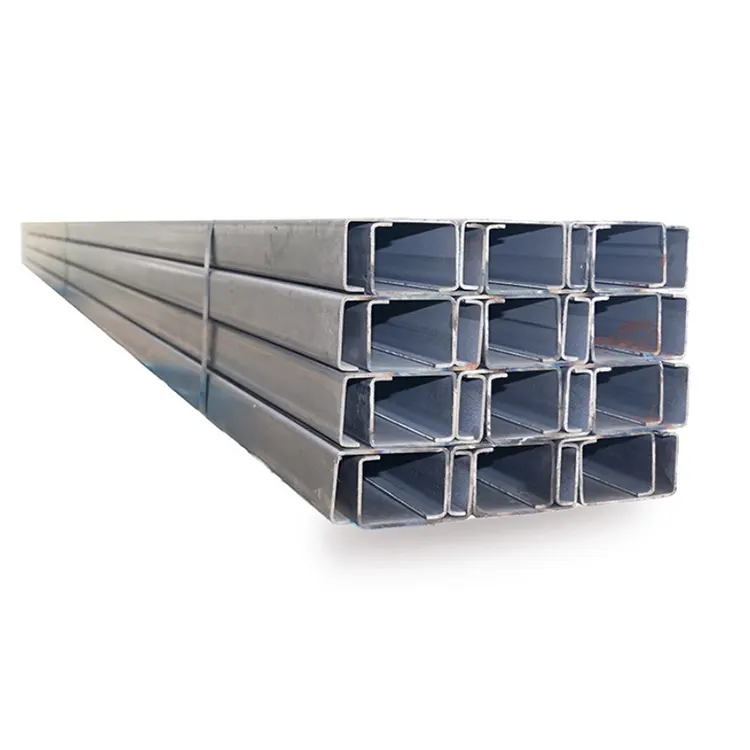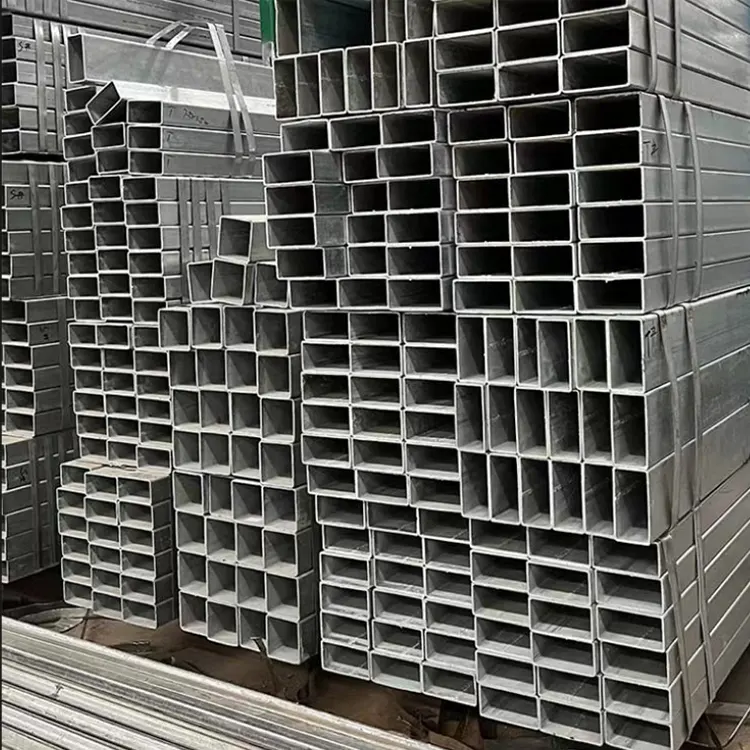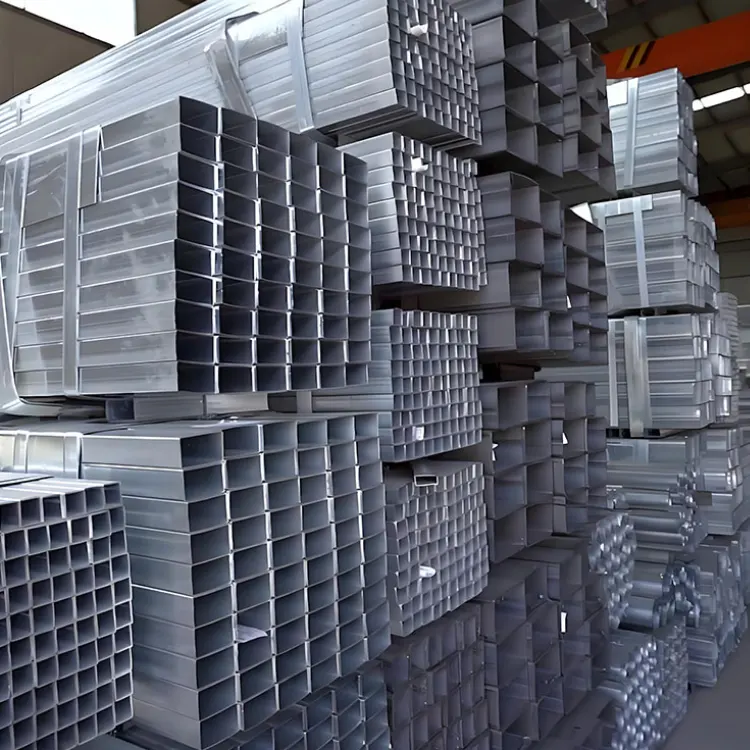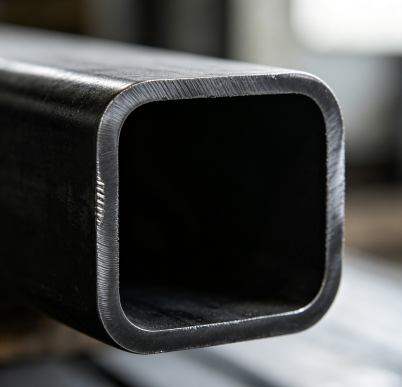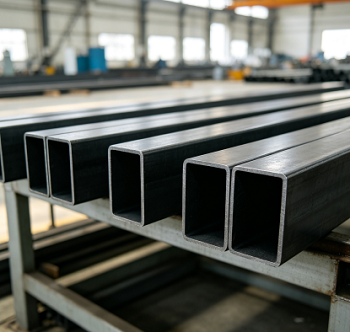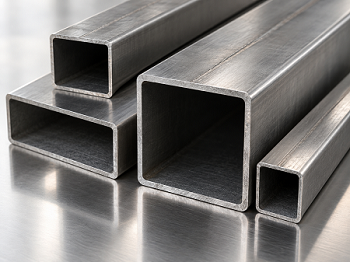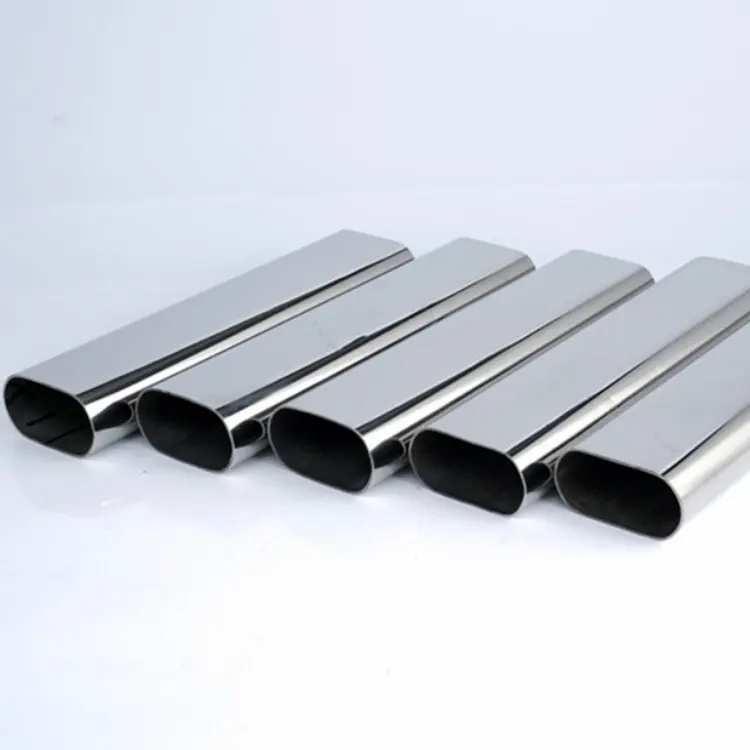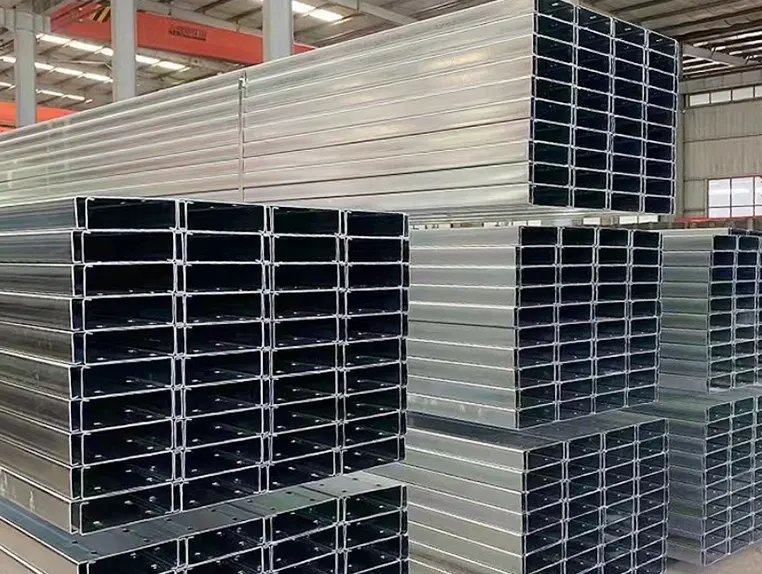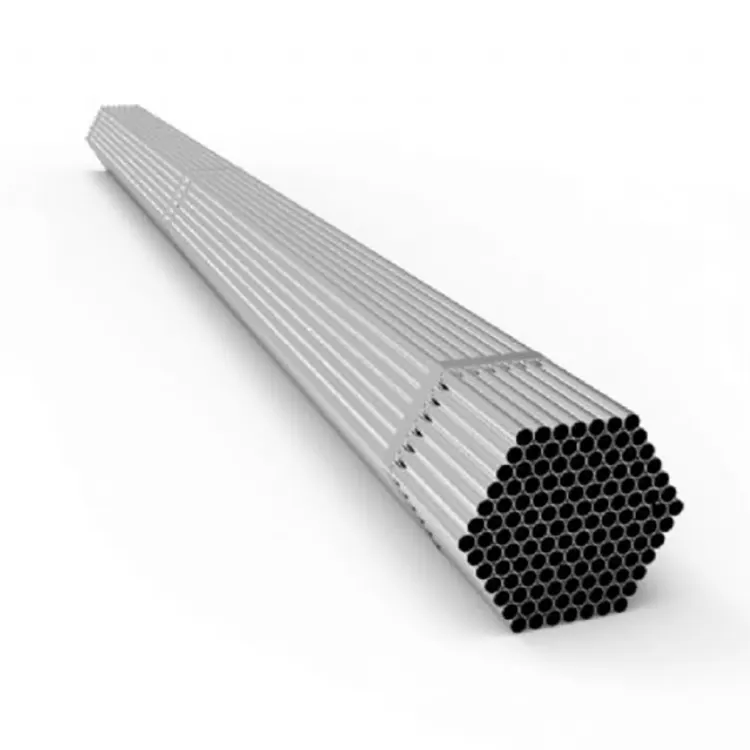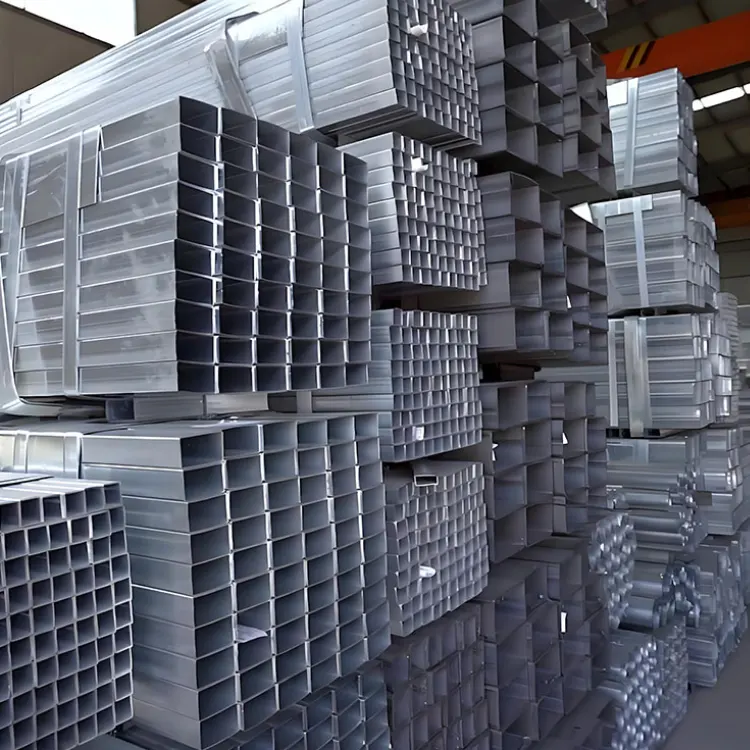
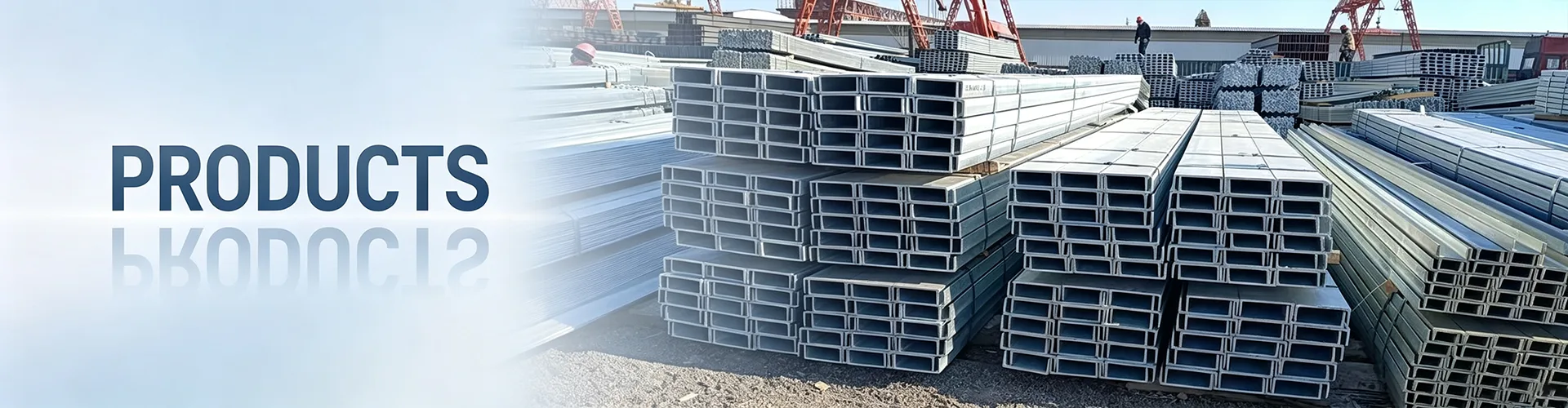
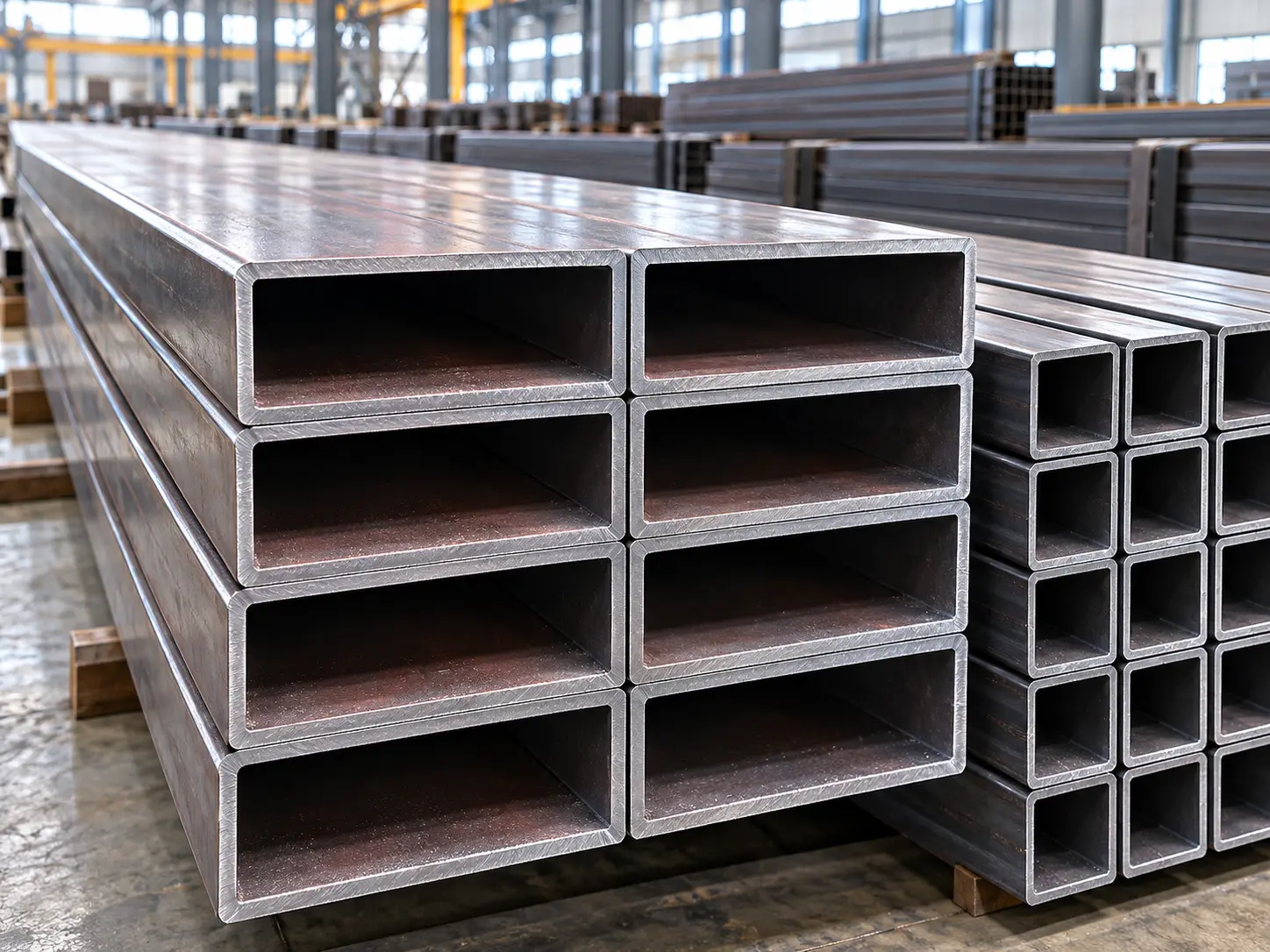
Large-diameter square and rectangular tubes are welded hollow steel sections. Produced from hot-rolled coils or steel plates, they are formed by closing the section along a longitudinal weld seam and then sizing it to ensure flat outer surfaces and precise right-angle corners. Due to their closed cross-section, they offer resistance to bending about both axes and torsion about their central axis; consequently, columns and truss chords do not require stiffener plates to brace the compression faces. All four faces are flat and parallel along their entire length, allowing base plates, brackets, and clamps to be bolted flush against the surface at any position without straddling the weld seam. The continuous internal hollow space allows these large-diameter tubes to be filled with concrete, extended via internal liner pipes, or utilized as conduits for wiring or drainage.
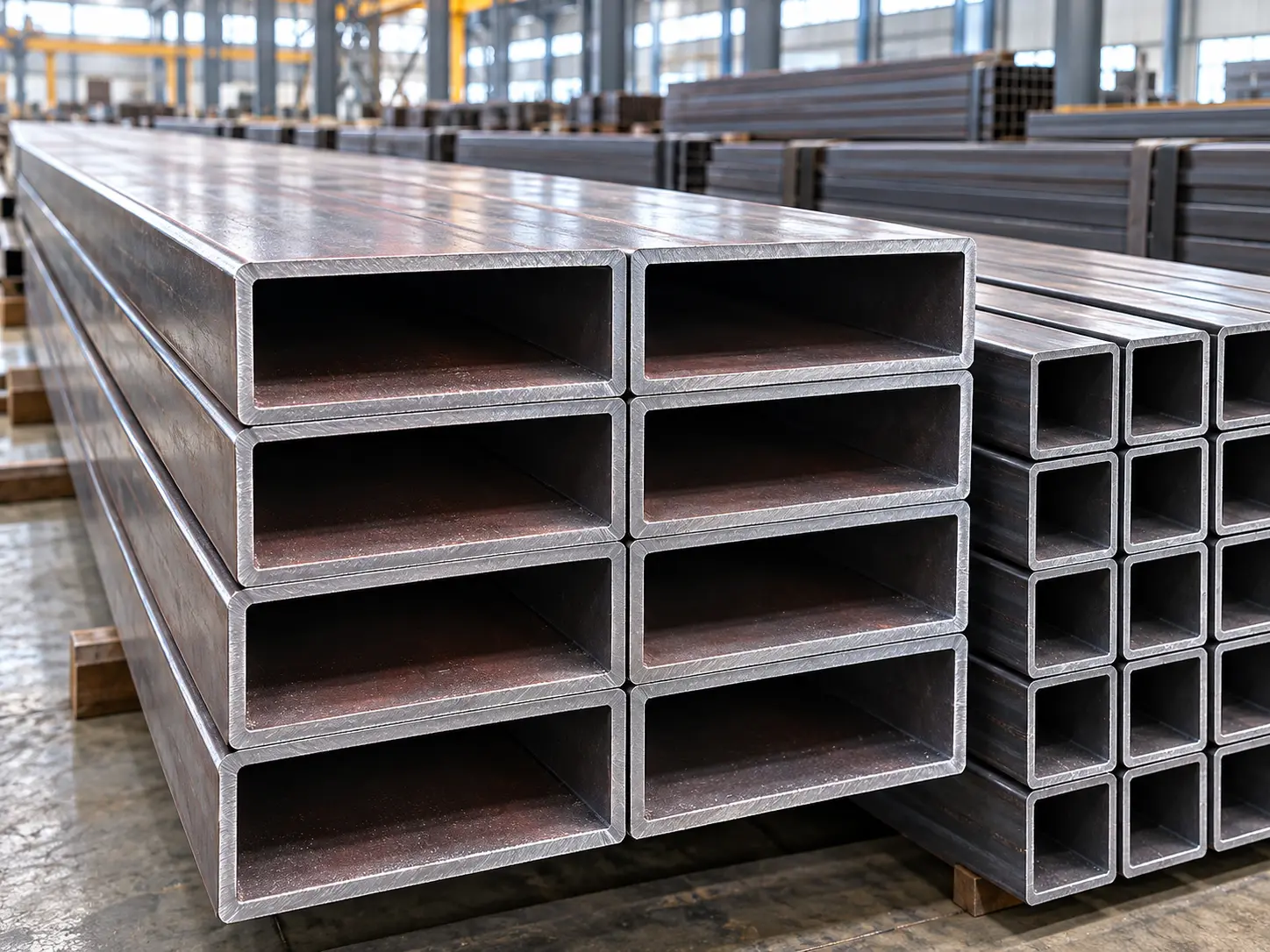
To expedite the inquiry process for large-diameter square and rectangular tubes, the fastest approach is to provide six key pieces of information—there is no need to submit a full set of blueprints.
| You Provide | We Reply | Why It Affects Price |
|---|---|---|
| Side length and wall thickness, specifying nominal or minimum values | Confirm whether the size is a standard stock size or requires custom production, with respective lead times | Wall thickness determines the forming process, and the forming process determines the production schedule |
| Total linear meters or a cutting list | Nesting plan, and whether you will take the offcuts | Workshop cutting per the list is usually cheaper than cutting on site |
| Max single-piece weight the site crane can handle | Segmentation plan and splice joint details | Component size is governed by site lifting capacity, not the drawings |
| Joint (node) drawings, not just hole positions | Re-check of fillet radius and dimensional tolerances | Holes near corners may fall on the fillet area |
| Surface treatment requirements, and whether the inside of the pipe needs treatment | Whether vent/drain holes are needed and where they should be located | Zinc cannot be plated inside sealed bores |
| Destination port and subsequent transport mode | Packing, bundling and loading plan | Freight rate for overlength items differs from that for standard lengths |
Large-diameter square and rectangular tubes are ideal for applications where open-profile steel sections would otherwise require stiffener plates, or where two separate structural members would typically be needed to perform the function of one. The following are the most common applications for which we provide quotations:
Perimeter columns, wind-resistant columns, and portal frame columns typically utilize sizes ranging from 300×300 mm to 400×400 mm, with wall thicknesses of 10 mm to 16 mm. The closed cross-section provides bending resistance in both directions, and tie-rod connection plates can be welded directly onto the flat surface without the need for stiffeners; columns located outside the building envelope are typically finished with paint or hot-dip galvanizing.
Large-diameter square and rectangular tubes filled with concrete serve as composite columns; the internal hollow space is the primary reason for selecting this profile. Please specify in advance if the tubes are to be filled with concrete, as the inner walls must remain uncoated—any protective oil applied for storage could otherwise create an interface layer between the steel and the concrete.
Truss chords larger than 400×400 mm can replace double-angle or welded box sections, reducing the number of node components and weld seams. When chords are exposed, the smooth tube surfaces and ground-flush welds create a clean, linear aesthetic rather than a cluttered, bulky appearance.
Equipment frames often utilize Q355B steel with thicker walls; the tube surface serves as the mounting datum, ensuring precise alignment for load-bearing or dynamic components. Internal cavities accommodate cables or hydraulic lines, integrating the frame structure with the utility routing.
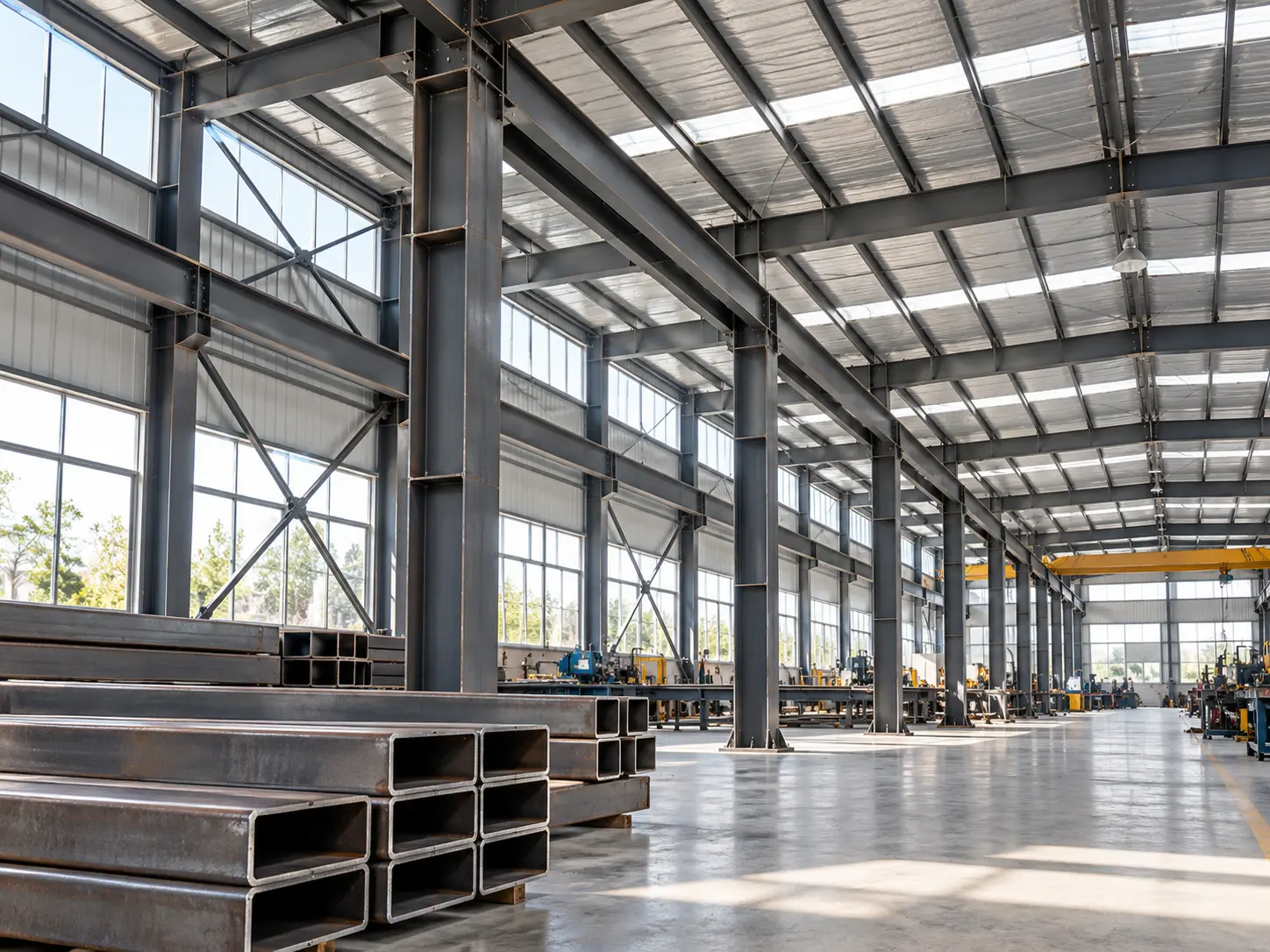
Verify that heat numbers, steel grades, and mechanical properties match the quality certificates; measure thicknesses at coil ends or multiple points on plates. Materials not conforming to certificates are rejected from production.
Calculate the flat width based on the finished cross-section of the large-diameter square and rectangular tube. The "direct route" involves closing the section in a single pass on the roll-forming line; the "secondary route" involves first welding the strip into a round tube and then reshaping it into a square or rectangular section—a method permitted by standards for wall thicknesses of 18 mm and above.
A single high-frequency longitudinal weld seam ensures full penetration through the entire wall thickness along the full length. Welding power, frequency, and line speed are recorded per shift; any deviation in these parameters can result in defects such as lack of fusion or burn-through.
Sizing rolls lock in external dimensions, diagonal measurements, and corner radii. Large-specification tubes require more intensive straightening than smaller ones to eliminate bending and twisting before delivery. A sawing machine cuts the tubes to the ordered lengths.
Each piece is weighed and checked against dimensional tolerance categories; before packing, a sample from the first batch undergoes wall thickness measurements on all sides and diagonal checks. If your inspector requests data, we provide these actual measured values.
For hot-dip galvanizing, the immersion angle is determined by the vent hole locations specified in the drawings, and coating thickness is verified via batch sampling. Pre-galvanized components are formed entirely from galvanized strip steel, with the exposed strip at the weld seam marked to indicate where touch-up painting is required.
Bundles are secured with steel strapping and wrapped in rainproof film; for products compliant with GB/T 6728-2025, no spacers are used inside the bundles. Lifting points are marked on the tubes; wooden pallets are used for sea and rail transport, and the loading plan is provided to you before the truck arrives.
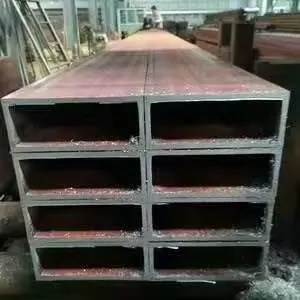
A: Our supply range starts at 300×300 mm for square tubes (up to 600×600 mm) and extends to 400×600 mm for rectangular tubes, with wall thicknesses from 6 mm to 25 mm. There is no advantage to purchasing sizes below 300 mm from this specific product line—thinner cold-formed sections are both suitable and more cost-effective, so we would recommend those instead.
A: Specifying only the wall thickness figure without the grade. "25 mm" alone does not constitute a full specification: at such thicknesses, allowable tolerances are measured in millimeters, meaning two different suppliers could deliver two different—yet fully compliant—tubes. Please specify the nominal or minimum wall thickness, indicate whether nominal or actual values are used for calculations, and clarify whether the inspector will measure all four sides.
A: We can manufacture 12-meter lengths; they fit lengthwise into a 40-foot container, though the number of pieces per container is lower for these large-section profiles compared to 6-meter lengths of the same tonnage. We will provide a loading plan with our quote so you can compare the 12-meter option against using two 6-meter lengths spliced on-site. Please note: The GB/T 6728-2025 standard prohibits the delivery of closed-section steel profiles joined by butt welding; therefore, components exceeding our maximum manufacturing length must be properly segmented rather than created by welding two shorter pieces together.
A: The exterior can certainly be galvanized; the interior can only be galvanized if air can escape freely. Please send us the connection details or specify the locations of the end caps; we will determine the placement of air vents and drainage holes to ensure smooth zinc flow in and out. If the tubes are intended to be filled with concrete, please let us know so we can leave the inner surface uncoated.
A: Forming and welding are carried out on our own production lines in Daqiuzhuang, Tianjin, and galvanizing is scheduled within the same production cycle. If you wish to view the production line before placing an order, we can arrange a live video link from the workshop.
A: We provide a quality certificate based on the heat number, detailing chemical composition and mechanical properties, along with our own records of dimensions, weights, and coating specifications. If you also require actual measurements of wall thickness and diagonal dimensions from the initial batch, please request this at the ordering stage so we can include the data in the same record sheet.
Address
S213 Jinghai District, Tianjin City, China
Tel